Questions Remain in HD Mining Case
Key evidence was struck from the record in federal court, say unions.
Chinagate: Who's Minding the Resource Store?
Asia tension could lead to conflict—DFA chief
China seals first free-trade deal with Switzerland
China should not be a "free rider" in global trade, the EU's trade commissioner has warned.
Report Hits Out At China's Black Jails, Self-Immolations
Activists Warned Off Tiananmen Memorial March
Toxic Rice Highlights China's Lack of Openness on Pollution
Kinder Morgan takes next step in its Trans Mountain oil pipeline expansion plan
Bitumen Doesn't Float
Activists demand public hearings for coal export project
USDA Stands Firm on Consumer Meat Labels, but Will the WTO Continue its Anti-Consumer Legacy and Authorize Trade Sanctions?
RECAP FROM LIMA: Experts, Activists, and Peruvian Members of Congress Rally Against the TPP
London on edge and police fill the street as public beheading stokes ethnic tensions
Stockholm calmer but violence spreads outside Swedish capital
Accused in alleged terror plot seeks lawyer who will use Qu'ran as 'reference'
Canadian drug policy experts recommend decriminalizing all drugs
Russia’s top military officer skeptical about further nuclear arms cuts
Police agency Interpol quashes Russian bid to hunt down UK investor
Showing posts with label wto. Show all posts
Showing posts with label wto. Show all posts
Friday, May 24, 2013
Tuesday, May 14, 2013
Communist China wins BC election


After all polls predicted a major liberal loss, the Communist backed ruling Liberals win a solid majority victory. The battle over the infamous pipelines advances to the next stage as citizens prepare for a showdown with foreign imperialist forces.
Cyber Threats could overwhelm Canada within two years: CSIS
Harper assailed for cutting Elections Canada budget despite rampant vote problems
Procedural errors rampant during 2011 federal vote: Elections Canada
BC's Labour Market Weaker than Worst of Recession
The Pipeline Plan that Rattled BC, Explained
Probability of Enbridge oil tanker spill as high as '99.9%': SFU study
Enbridge breaks safety rules at pump stations across Canada
No evidence BC gov't investigated recruiters charging temp foreign miners produced
BC's Fish Farm Falling out, Explained
Drug companies not involved in ministry purge, says minister
Five Reasons to Turf Christy Clark's Liberal Crew
Green party's Elizabeth May on Energy Security
Debate has been about how best to export raw, virtually unprocessed bitumen — as much as possible and as quickly as possible. Meanwhile, the eastern half of Canada depends on imports of foreign oil from Saudi Arabia, Nigeria, Kazakhstan, Venezuela, and Norway. As Gordon Laxer of the Parkland Institute tried to point out to a Parliamentary committee (before the Conservative chair ordered him to stop talking and stormed out of the room), Canada has no energy security.
I feel some responsibility for this shift in debate, as I was the first political leader to point out that there was something wrong with the picture.
Unlike the US, we have no Strategic Petroleum Reserves. If there was a blockade of foreign oil or an economic embargo, those in Eastern Canada would have to wait for tankers to bring them bitumen for processing through the Panama Canal and up the eastern seaboard. As bizarre as that sounds, it was the solution offered by a Suncor executive when asked in committee about the vulnerability of eastern Canada to embargos.
Oppositional Canada
The irony is that the dividing line of foreign oil to the east and Alberta oil for the west was the result of deliberate government policy—aimed at helping the Alberta oil and gas sector. Back in 1961, the National Oil Policy decreed that eastern Canadians (east of the Ottawa River) would only receive imported oil while those in the West had to purchase Alberta product. By deliberate policy, Eastern Canadians became dependent on foreign oil, while Alberta oil was consumed by those in western provinces and exported to the US. Now it is time to think like a country.
The Solution: Shipping East?
However, the current proposal also makes no sense. Former New Brunswick Premier Frank McKenna has proposed shipping unprocessed bitumen to St John, New Brunswick, to put it in tankers to export it from there. Others are proposing refining it in New Brunswick.
The first decision point is Enbridge’s application to reverse its Number 9 pipeline. This pipeline was built in the 1970s and had originally flowed west to east. It was reversed in the 1990s as the markets favoured cheaper foreign oil.
Now, Enbridge is applying to reverse it once again, running a different product, dilbit, from west to east. The request to the National Energy Board is being considered in two stand-alone applications; Line 9A (Sarnia to North Westover) and Line 9B to Montreal.
From there the bitumen would likely go south through New England. When I was in Washington DC, I heard from quite a few Congressmen and Senators that they do not want those pipelines over their territory.
Bitumen
The nature of bitumen and diluents in pipelines is a critical issue in why the Green Party oppose pipelines of unprocessed product to either coastline. So, before talking about the direction of pipelines, we need to talk about the product.
Even after the extensive and intensive process of extracting the viscous material known as bitumen from the soil in which it is found (generally about 10% by volume), it is still not processed to even the level of crude oil. Crude oil can flow. Bitumen cannot. It has the consistency of peanut butter, so needs to be mixed with something else to flow. That something else is called ‘diluent’—a mix of undisclosed chemicals. The most commonly used diluent is a natural gas condensate, similar to Naptha. The public does not know the make-up of any particular diluent. Some have more benzene than others—benzene is a well-documented carcinogen.
The resulting so-called dilbit product is about 30% diluents and 70% bitumen. We do know a lot more about dilbit than we used to. And we did a lot of that learning through the 2010 Enbridge dilbit spill in the Kalamazoo River in Michigan. We know it both floats and sinks; that it is far harder and far more expensive to clean-up than unprocessed conventional crude. The Kalamazoo spill is still not cleaned up.
Meanwhile a debate rages about whether dilbit is more likely to cause pipeline failure. Cornell University found that between 2007 and 2010 pipelines carrying dilbit had a spill-rate three times higher than pipelines carrying conventional crude. Oil sands products have a higher sulfur and a higher acidic content than conventional crude and those properties could explain its increased corrosive nature.
This finding led to the Department of Natural Resources to commissioning a study by a group called Alberta Innovates Technology Futures (ATIF). That study compared dilbit and conventional crudes and concluded the types of corrosive compounds between the two products were comparable. So we have labwork versus the real life rate of spills in US pipelines. At the moment, despite what Harper’s Cabinet ministers claim, the science on the corrosive nature of dilbit is not settled.
Meanwhile, if local residents along the Number 9 pipeline wish to speak before the NEB hearings, or even submit a letter, they are required to fill out a 10-page form, and are also encouraged to submit references and a resume! This is an NEB effort to meet the new requirements imposed by the horrific overhaul of the Canadian Environmental Assessment Act that took place last year in the Omnibus Budget Bill (C-38).
Unlike the previous CEAA, which was premised on a fundamental commitment to rights of public participation, the Harperized CEAA restricts access to only those ‘directly affected’. The NEB has made this restriction even worse by demanding that any citizens who want to make comments, fill out the forms and apply within a two-week period—which will close before this article will be in print.
Refineries In Alberta
So, what should be done? The best environmental, economic and climate outcome would be to slow down the boom-and-bust cycle of constant expansion in the oil sands. What the late Peter Lougheed used to describe as the ‘traffic jam’ of feverish expansion in the oilsands prevents the construction of ancillary infrastructure, like upgraders and refineries.
The hyper-inflationary bubble that sits on northern Alberta is what makes it cheaper for Big Oil to build a $7 billion pipeline to Texas, rather than build facilities in Alberta. Any reasonable carbon plan would set a level of managed growth for oil sands production—say 2 million barrels of oil a day (more than the current 1.7 million barrels, but less than Harper’s goal of 6 million barrels of oil a day). That level of production could cool down the capital and labour markets enough to build upgraders and refineries near the resource. Then, we could be talking about shipping—by pipeline, truck or train—a finished product whose properties are better understood. Shipping a product with a far lower risk of environmental impact in the event of spills.
If we are thinking like a country, we should get Alberta oil to Eastern Canada, but we should not ship bitumen + diluents.
Weaver wins first ever Green seat in BC: Globe
Elizabeth May Tables Bill Targeting Excessive Party Discipline
Conservatives boost resources ad spending to $16.5M, target U.S. audiences
Harper Government Media Monitoring: Opposition Accuses Tories Of Spying On MPs
Effort afoot in court to sue Canadians for illegal downloads
Public Citizen and Sierra Club Denounce World Trade Organization Attack on Successful Clean Energy Program
Who hires temporary foreign workers? You’d be surprised
For young Canadians, labour market as bad as during the recession
Trade Talks? Only Business Insiders Invited
Global youth unemployment set to rise, UN warns
Canada's foreign-born population soars to 6.8 million
What Is TPP? Biggest Global Threat to the Internet Since ACTA
Canada loses appeal at WTO over Ontario's green energy legislation
More Conservative MPs say No to taxpayer-paid attacks against Trudeau
John Ivison: Grim report warns Canada vulnerable to an aboriginal insurrection
12 Latin American Governments Gather to Confront Extreme Investor Privileges Regime
Pentagon plans to share missile secrets with Russia
Did Citizens United thwart the effort to overturn “Citizens United” in Washington
Pentagon Paying Chinese for Satellite Bandwidth
Republicans say U.S. headed toward ‘armed revolution’: Poll
Why the world is reading Gillard's defence paper
‘Get ready to fight’: China shifts from Deng’s ‘low profile’ to Mao’s aggression | World Tribune
China Escalating Territorial Disputes with Neighbors
Chinese think tank warns of more 'serious' incidents
AFP: China should ‘reconsider’ who owns Okinawa: academics
Medvedev Says Russian Rearmament On Level With WWII
Why China Lets North Korea Run Wild
Russian military again flies strategic bombers near Alaska
North Korea missile can hit US with nuclear warhead, Pentagon report says
Xi Jinping and the Chinese dream
China’s rift with Japan is open challenge to U.S.
China Registering the Religious in Xinjiang
Chinese government has U.S. auto industry in cross hairs
Chinese Hackers Raiding U.S. Military Tech Secrets
Inside the Ring: Russia builds up, U.S. down
China risks war as it pushes its territorial claims in Asia
Red Lines, Deadlines, and Thinking the Unthinkable: India, Pakistan, Iran, North Korea, and China | Center for Strategic and International Studies
China's Militant Nationalism
Xi's War Drums


Sunday, April 28, 2013
UBC trains Chinese officials how Canada Government works
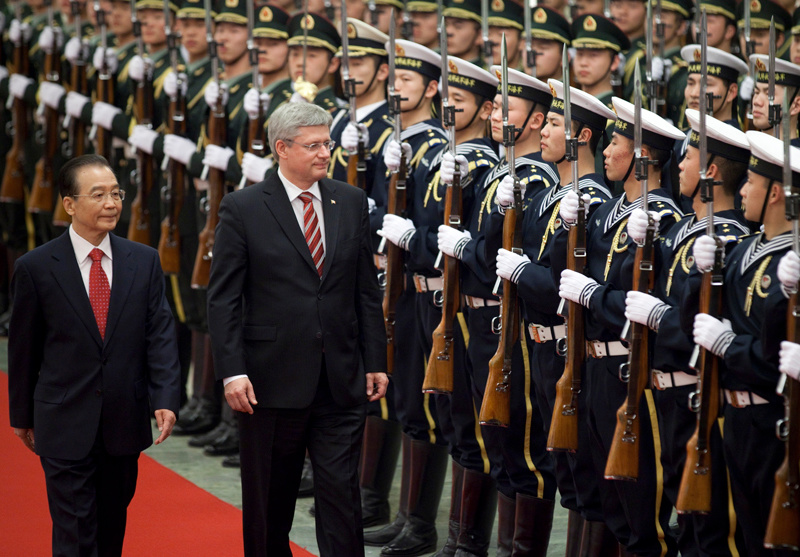
The elite school many Canadians can't afford to go to rolls out the red carpet for Communist party officials to be given a world class education in how to work the Canadian government. Odds are this will be the most under reported story of the year. No major mainstream coverage.
UBC trains Chinese officials how to work Canada Government
" The University of B.C. will soon become a temporary home to about 125 Chinese civil servants looking to learn as much as possible about the Canadian political system and public policy. "
Sauder to train Chinese bureaucrats in public policy
" UBC has finalized a deal for Chinese government officials to come to the university and take summer classes for the next five years. "
China’s stealth wars of acquisition
" Since the Mao Zedong era, China has adhered to ancient theorist Sun Tzu’s advice: “The ability to subdue the enemy without any battle is the ultimate reflection of the most supreme strategy.”
This approach involves taking an adversary by surprise by exploiting its weaknesses and seizing an opportunistic timing, as well as camouflaging offense as defense. As Sun Tzu said, “All warfare is based on deception.” Only when a war by stealth cannot achieve the sought objectives should an overt war be unleashed. "
The U.S. Chamber of Commerce is fighting for the right of oil, gas and mining corporations to keep payments to foreign governments secret
Industry lobbies for right to bribe corrupt officials.
Global Civil Society Expresses Rejection of the Report, “The Future of Trade: The Challenges of Convergence”
Our World is Not For Sale
" The “Our World is not for Sale” (OWINFS) network is a loose grouping of organizations, activists and social movements worldwide fighting the current model of corporate globalization embodied in global trading system. OWINFS is committed to a sustainable, socially just, democratic and accountable multilateral trading system. "
This Workers’ Memorial Day, “Pray for the dead and fight like hell for the living”
(Mother Jones, 1925)
SEC commissioner, others call for SEC to protect investors from forced arbitration
Charles Schwab Corporation responds to Public Citizen petition
Digital currency dealers grapple with big banks and murky financial rules
Friday, December 21, 2012
Industrial Apartheid – How to Stop the New World Order Part 2
Wealth, Nations, and the New World Order
To become wealthy one must consume less than they produce and invest the excess savings wisely. I'm sure we all know people who just can't seem to figure this out. They spend everything they earn as soon as the cash flows in. Some people even go into debt to finance their irresponsible consumption. Debt is only good if it is used as a tool to finance investments that produce a return, and even then caution should be used to keep debt at a manageable level.The same principles that apply to individuals apply to nations. A nation can not consume more than it produces and expect to remain a wealthy nation. Nations engage in trade with one another just as individuals do. Goods can be exchanged for three things:
Other Goods (I trade my lumber for your smartphone)
Debt (I promise to pay in the future plus interest for your smartphone)
Assets (I sell my business to you for your smartphone)
If a nation is consuming more than it is producing it must pay through the creation of debts or through the sale of assets. No nation can issue debt forever, as eventually the country will not be able to afford the interest payments. No nation can sell assets forever as every nation only has a limited amount of assets. Our capacity to trade is finite, it is limited to our ability to pay. Therefore the strategy of a leader should be to increase the wealth of the nation, by maintaining stewardship over the balance of trade.
A nations consumption should be regulated, that it not exceed a nations production, unless in times of legitimate crises such as war, where the survival of the nation is at stake. The objective of national wealth is met by the maximization of national ownership over advanced productive assets, and the minimization of national obligations to deliver future payment to foreign creditors. In short, it is the responsibility of our representatives in government to increase our ownership of assets and decrease our debts to foreigners.
We are now living in a New World Order. The Globalists have moved our national productive capacities outside of our boarders. Our economy is made in China, and all the wealth generated that once would have gone to balance our books is now in the hands of a racist Totalitarian Regime. Our corporations are no longer national but “multinational”. They have no loyalty to our national objectives. In fact many times the interests of corporations are in direct conflict with our national interest.
When corporations were first permitted to exist, there was effort taken to ensure that they served the public interest. In exchange for limited liability, a protection to limit the liability of investors to what they invested, investors were meant to serve the public interest. It was an exchange, a transaction between the state and the private investor, legal protection for public service.
This is in sharp contrast to the role of corporations in today's society. Today the corporations have concentrated so much wealth, so much power, that it is often the corporations who now regulate the behaviour of the government.
Multinational corporations will act to maximize corporate wealth regardless of the consequences to our national wealth. Therefore we must bring the corporate interest back into line with the national interest through policy and regulatory instruments.
To become capable, one must be engaged in activities that build capability. One must read write and think to become learned. One must exercise to become strong. Those who do not commit to engaging in these activities will not become learned or strong. Capability is a manifestation of the will to become capable.
The same principles that apply to individuals also apply to nations. National Capability is the aggregate capability of the people of the nation. To create national wealth it is not enough to simply balance the dollar value of trade. The steward must also act to ensure that the people of the nation are employed in advanced activities that improve capability. It is not good for any country to be trapped as a resource colony of another.
The service sector alone does not provide sufficient opportunity for a nations people to reach their fullest capability. Furthermore, economies that are now overly dependant on the non-tradable service sector are not producing value added tradable goods. This leaves two options for a nation, run trade deficits, or massively increase exports of raw materials to pay for all the finished products entering the country.
Both options are bad. Trade deficits mean more debt and asset sell offs. Raw resource exports combined with lack of manufacturing capability mean the nation will become dependent on imports of finished goods. Finished goods that will cost more to the nation than was earned through initial export, forcing an increased extraction of the nations resources just to pay the spiraling cost of value added imports.
Industrial Apartheid is a form of Economic Imperialism where one nation monopolizes manufacturing and captures other nations, making them supply raw resources to the aggressor while prying open the captive nations markets to be flooded with manufactured goods of the aggressor nation. The aggressor nation becomes wealthy off of the captured nations and make every effort to make sure that the captured nations do not gain their Industrial Independence. This is done through the corruption of the ruling class in the captured nation using a cut of the loot taken by the aggressor. The New World Order is Industrial Apartheid.
To stop the New World Order and the Globalists we must rise up as the worlds people and assert our Industrial Independence. We must spawn a new political movement that will bring manufacturing capability back under the control of the people. Every nation has a right to produce. No nation, no people should suffer under the chains of eternal debt slavery.
Our future should be one where democracy and human rights are the property of all human beings. Where every local region has the capacity to offer its people opportunity, because the old NWO manufacturing monopolies were broken. Our future is one where the unholy axis between multinational corporations and the communist party of China is broken, and the will of the people is no longer beholden to the dictates of international trade and investment deals crafted and administered in secret.
These are more than words, these are ideas. These are the dreams and the aspirations of the worlds people. No one really wants to kill or die for the corrupt and powerful. No one wants to live in a world where the people are threatened with violence all to maintain the power of a psychopathic minority. No one wants Industrial Apartheid, so now let us unite in our declaration of Industrial Independence.
This endeavour will require us to elect representatives that will operate according to the principals of Industrial Independence and Democratic Sovereignty. Industrial Independence being the notion that every nation has a right to manufacturing capacity, and Democratic Sovereignty being the right of a nations people to decide their own trade and industrial policies regardless of the dictates of the World Trade Organization or any other international trade and investment deal.
The policies to be adopted will vary from nation to nation but the underlying idea will be the same. Nations should produce at least as much as they consume. Nations have a right to have their own manufacturing industries. Nations have a right to produce their own food and set strict food safety regulations. Nations have a right to refuse foreign takeovers of their productive assets. Ultimate authority rests in the hands of the people of the nation through the process of democracy and not in the corporate boardroom. CEOs must balance the needs of the country with the need for efficiency.
Whenever possible the act of consumption should be taxed over the act of production. We want to create an incentive for people to act responsibly. Nations should have the right to set tariffs, impose non-tariff barriers and even ban imports. Nations should be able to build their grids using components domestically produced or produced in friendly democratic countries. Nations should be able to feed themselves and provide for their defense.
Strategic Industrial policy’s can be crafted by a vetted team of technocratic business strategists, futurists, engineers and scientists whose mandate is to create a long term national strategy to achieve National Capability. A central agency can be created to co-ordinate all branches of government to be in line with the national economic interest. An industry portfolio management division should be created with the mandate of maximizing the number of star and cash cow industries.
We must provide incentives for industries to localize operations. Local start ups should be nurtured in exchange for their long term commitment to localized production, employment and the national interest. Supply chains should be localized. Research and development should at least be 3% of GDP, preferably more.
Education must include courses on how to handle money, business, critical thinking, philosophy, ethics and how to take responsibility for your family and your country. We must commit to building character in our people as they are the strongest tower of our defense.
We should create a National Manufacturing Research and Development Agency whose mandate is to research advanced production techniques to improve the efficiency of our producers. The innovations can be licensed to domestic producers. The objective will be to find advances in areas like new processes, information systems, robotics, advanced materials, energy efficiency, mass customization, waste water management, 3D printing, modularization, continuous flow.
We should consider establishing special economic manufacturing zones in depressed areas with tax advantages and a ready supply of unemployed labour. We should Co-ordinate to activities of our nationally controlled multinationals so they do not cannibalize each others strategic moves.
Core industries must be kept under domestic control including defense, agriculture, energy, health, infrastructure construction, education. The strategic goal of a nation should be to retain National Capability, the ability of a nation to take actions and create its own future free form foreign aggression and manipulation of the democratic process.
Our objectives should include a commitment to keep growth industries in within our jurisdiction, and to not surrender our capacity them to the evils of outsourcing. We invest a lot of resources in developing new projects, only for production of those projects, and thus return on investment, to leave our jurisdiction. This waste must end.
We must put provisions in place to prevent trade deficits from occurring. We must limit foreign ownership of our debts and require retirement plans to invest a percentage in public dept, sweetening the deal by making the required contributions interest tax free.
We should create a national development bank to provide funding for national projects and provide below market rates to patriotic domestic companies acting in the national interest.
Our goal should be to make our nations into leading technological innovators. If all nations are directing resources to this we can tap the human talent pool, and prevent authoritarian regimes from monopolizing technological capability. We should provide organizational assistance to underdeveloped democracies of the world to build relationships with the mutual goal of undermining Industrial Apartheid, and advancing the cause of human rights. We should create an Alliance of Democracies.
Me should maintain focus on the strategic industries of the future, clean energy, next generation information technology, biotechnology, high tech manufacturing, new energy sources, new materials, new energy cars/ transportation methods. We should plan cities to require less transportation infrastructure, mixing living, working, shopping and recreation centers.
Government procurement should be purchased from domestic industries, increasing output, spreading fixed costs over more units and thus lowering cost per unit. We must strategically guard against foreign direct investment by hostile nations.
In order to deal with imbalances there are a number of non-tariff barriers that can be utilized including, import bans, country of origin requirements, protection of sanitary and phytosanitary conditions, product specific quotas, quality condition regulations, packaging and labeling requirements, product standards, trade documents, certificates of origin or certificate of authenticity, health safety regulations, employment laws, import licenses, rules about subsidies or state ownership, rules against export subsidies, minimum import price requirements, import quotas, lengthy customer procedures.
We should regulate the practice of transfer pricing.
Instead of the government going into debt every time they feel they need economic stimulus, government owned limited liability corporations should go into debt and spend on the domestic economy, this way the public has limited liability, debt obligations are compartmentalized and funds are directed in a more targeted manner to undertake specific industrial objectives.
An international media campaign should take the message of Industrial Independence, opportunity, and prosperity directly to the worlds people. Once the electorate is organized and aware the politicians will have a hard time ignoring the will of the people if they want to be elected. No one wants to be a resource colony to a violent totalitarian regime. Preserving our democracy is preserving our prosperity. With every act of oppression directed towards us, the movement will grow.
Money must be taken out of politics. Donations should be limited to citizens only, not organizations, and a limit of some small amount, say $20 max donation per person per year should be put in place. Tax breaks for political donations should be eliminated. Limits should be put on the amount an individual can use of their own money to finance a political campaign. Politicians should not be allowed to hire strategists, communications directors, or campaign managers. This will promote more open dialogue about the issues and remove a lot of spin.
Lobbying should be illegal. If you are a corporation with infinite funds you should not get special access to write the nations laws. Political parties should be less powerful and candidates should not be pressured to vote the same way as their party. The debates should be moderated with clearly set rules stating that the candidates must stick to the issues.
Our political systems must be reformed. As they stand they do not represent the broad will of the people. There are too many barriers to participation, and entire election cycles can pass without any real issues being addressed. People are disengaged because they are sick of this never ending circus. Reforms must be made to ensure we are never led down this path of debt, asset sales and outsourcing ever again. Capitalism in it's current form is at odds with national prosperity.
Our dream is one where people can live and love one another, free from political violence, in functioning democracies that protect the human rights of the people. A world where nations do not consume more than they produce, where industrial production is localized, and the efforts of the worlds nations are focused on innovation funded by localized opportunity centres in every region, fed by the talent and aspirations of the worlds free thinkers.
The way of localized manufacturing is the way we must go for two reasons:
1. Our current trade imbalances are unsustainable both financially and environmentally.
2. If we allow advanced manufacturing production and innovation to be concentrated in the hands of the communist party of China, they will being death and destruction to the worlds people. We must not allow a totalitarian regime who rules by the barrel of the gun to achieve global dominance. The lives of all those who think freely, and the value dialogue brings to society will be lost if power is left to those who have made it their goal to kill everyone who gets in their way of global domination.
Please put away your hatred and realize you are human. Your future is in learning to love those who disagree with you. Your future is in democracy.
Together we will stand for something.
We will make this all mean something.
Together we will end Industrial Apartheid.
Joel McLellan
Pray for us.

Saturday, December 1, 2012
Investment Treaties Basis of New World Order
The "Free Trade" agreements that have been forced on the world form the legal basis of Globalist Elite Rule. Our democratically elected "representatives" are bound by the orders handed down to them from unaccountable private international tribunals. Democracy has been stolen from us through an unholy axis between multinational corporations and the communist party of china.
The people demand the restoration of our sovereignty, that we may live in peace and self determination. That we may be secure from the clutches of tyranny. That no hostile force should rule over us, and all future generations are spared from the shackles of slavery.
The misguided belief of the few, that they are above the many, is the tragedy of mankind.
J

Within Canada, citizen opposition has
fueled a media debate that has, in turn, been dominated by people who
have an apparent financial stake in the outcome that has not been
disclosed to the public.
And now, a new report shows that while other countries like Australia are rejecting investor-state arbitration, this radical form of democratic override is fast becoming a booming industry that is costing taxpayers billions, and challenging government decisions and common sense laws all around the world.
Broad opposition to FIPA
The opposition to the Canada-China FIPA is widespread and growing. Through Leadnow.ca and SumOfUs.org's campaigns alone, over 80,000 Canadians have sent messages opposing the FIPA deal to their MPs and party leaders. This community has written hundreds of letters to the editor and funded radio and print ads to challenge Conservative MPs on their home turf. Nearly 20,000 Canadians wrote statements opposing this FIPA to the Department of Foreign Affairs and International Trade when they asked for public comment on their environmental assessment of the investor deal. Thousands have also spoken out against the Canada-China FIPA through campaigns organized by groups like the Council of Canadians, ForestEthics, Avaaz and the David Suzuki Foundation, and spontaneous protests have been organized around the country.
From First Nations to conservative pundits, opposition to this FIPA is diverse and strong. First Nations leaders from across the country, such as the BC Union of Indian Chiefs and Chiefs of Ontario, have condemned the binding investor deal because it would break constitutionally enshrined Aboriginal rights and title by granting China's companies special extra-constitutional legal rights that could supercede the ability of First Nations to self-govern their territory. Conservative commentators like Diane Frances have also slammed the Harper Conservatives, writing in the Financial Post that "Ottawa capitulated to China on everything" by negotiating an agreement that will give Canadian investors little protection in China, while granting China’s companies the ability to undermine democratic control in Canada.
Many expected Prime Minister Harper to pass the Canada-China FIPA on Nov. 1, immediately after a mandatory 21-day waiting period. But the broad-based pressure seems to be having an effect and the treaty is now sitting idle, ready to be ratified at any moment, but with no clear indication of when or if that might happen.
Expert voices in the media
As the days have turned into weeks, a group of FIPA proponents have spread out across Canadian media to laud the benefits of this controversial investor deal and downplay the risks to our democracy and economy while Prime Minister Harper regroups. For Canadians trying to make sense of trade agreements and this FIPA, it is important to understand that there are surprisingly few Canadians with deep expertise on the subject of FIPA agreements and investor-state arbitration, a new and rapidly changing field. Prof. Gus Van Harten is a Canadian expert with international stature who has been sounding the loudest alarm from the beginning. He has never earned income by representing a corporation or working as an arbitrator in an investor state arbitration.
In contrast, in media interviews professor Andrew Newcombe has largely dismissed concerns that the Canada-China FIPA will undermine Canada's democratic control. Prof. Newcombe shares something with many of the FIPA proponents who have been writing op-eds and conducting media interviews over the last few weeks: he has an apparent financial stake in the matter because he has earned income representing corporations in the growing investor-state arbitration industry, and could benefit from that industry's further growth if the Canada-China FIPA is signed. In fact, on his LinkedIn profile, Newcombe lists himself as available for "consulting offers" and "expertise requests" in relation to international arbitration.
In professor Newcombe's case, he represented (and may still represent) Commerce Corporation in a lawsuit that used the CAFTA investor deal to challenge El Salvador's moratorium on industrial gold mining. Newcombe also provides a private for-profit newsletter service to these firms that charges a premium for commercial firms engaged in this work.
For an even more prominent example, consider Matthew Kronby and Milos Barutciski, a pair of lawyers who have been advocating the Canada-China FIPA with op-eds in The Globe and Mail and Financial Post. These lawyers are partners at Bennett Jones, a firm that proudly offers its investor-state arbitration services to corporate clients who want to sue governments.
Prior to Bennett Jones, Kronby was the head of the federal government's Trade Law Bureau. He was the government of Canada's lead lawyer on the controversial CETA trade deal with Europe, and left mid-negotiation to take a job in the private sector. Barutciski used to be a lobbyist for Enbridge, the company hoping to build the Northern Gateway oil pipeline from Alberta's oil sands to Kitimat on the B.C. coast.
Canada sued for $250 million via NAFTA
Barutciski's recent actions, on the other hand, have completely undermined one of the most important arguments put forward by the industry insiders of the benefits of FIPA: that corporate lawsuits heard behind closed doors in the Canada-China FIPA's secret tribunals will not undermine Canada's ability to make common sense laws to protect our environment, create good jobs or stop dangerous projects. Barutciski, on behalf of Bennett Jones, is representing U.S. energy company Lone Pine Resources that has just declared that it will use the investor-state arbitration mechanism in NAFTA to sue the Canadian government for $250 million because Quebec put a moratorium to halt shale gas fracking, including Lone Pine's exploration permits, in order to study the health and safety impacts of the increasingly controversial practice. In doing so, Barutciski has powerfully demonstrated that foreign corporations can use these secretive mechanisms to threaten Canadian taxpayers with massive penalties for prudent democratic decisions, even if those decisions, like Quebec's moratorium on fracking, affected both foreign and Canadian corporations.
Investor-state arbitration lawyers have a right to share their views, and we have a right to know where they're coming from. Just like you'd expect a financial analyst to tell you if they owned the stocks that they were trying to sell you, the legal industry that specializes in this area should declare its interest when they comment publicly on an issue of such mammoth common concern.
The upshot is that while opposition to the Canada-China FIPA has spread rapidly, far too many Canadians, including many Members of Parliament, don't really understand the stakes of the Canada-China investor deal. For example, Conservative MPs have responded to the tens of thousands of emails they are receiving from their constituents with a nearly identical set of talking points, likely crafted in the Prime Minister's Office, that reflect the industry insiders' message. In addition, few politicians and pundits have recognized that this looming FIPA dramatically raises the stakes of the CNOOC-Nexen takeover. If the Harper Conservatives approve the $15 billion takeover, CNOOC will be treated as a Canadian company and be able to buy control over more Canadian resources without having to face another test to see if it is of "net benefit" to Canada. If this FIPA passes, CNOOC will then be able to sue Canadian governments in secret tribunals if those governments do anything to counter its growing interests.
Hurtling down an expensive legal road
A new global system is spinning out of control.
One of the biggest problems with the Canada-China FIPA is that it could lock us into this investor-state arbitration system for 31 years, and we have no way of predicting how this system will develop. How will the arbitrators interpret the interests of corporations and responsibilities of governments? How big will the damages be? How often will the threat of a lawsuit stop legislation before it's put in place? Today, investor arbitration is already becoming a big global business, with huge consequences for taxpayers and democratic control.
According to a new report, "Profiting from injustice: How law firms, arbitrators and financiers are fuelling an investment arbitration boom" by the Corporate Europe Observatory and the Transnational Institute, investor arbitration has boomed in recent years, from 38 cases in 1996 to 450 known cases as of last year. And, these are only the known cases -- there are cases that are not public, but we do not know how many.
A small group of elite firms with for-profit arbitrators and lawyers are getting rich from these deals. Today, legal and arbitration costs average over US$8 million per dispute -- and sometimes exceed US$30 million. Entire legal teams handle cases with elite law firms charging as much as US$1,000 per hour, per lawyer. Arbitrators also earn hefty salaries: as much as US$1 million per case.
Taxpayers are paying much of the bill for these law firm profits and the awards they are securing for their corporate clients, and we are talking about big money here. A WTO arbitration panel just ordered Ecuador to pay U.S. oil company Occidental Petroleum $1.7 billion, and one of China's companies, the Ping An Insurance Group, has launched a lawsuit against Belgium for $2 billion. The growing damages are creating an incentive for investor-state arbitration firms to advise their corporate clients to sue governments for ever larger sums -- and the lawsuits are weakening or preventing laws that would put the public good ahead of narrow corporate interests.
The report maps an inner network of highly influential firms that it alleges are disproportionately involved personally and financially in these cases and arbitration. The report claims many arbitrators play double or triple roles, alleging that these arbitrators act as counsel, as academics, as government advisors, as lobbyists and as media commentators. The report also alleges that some have strong personal and commercial ties to companies. All this gives these firms huge influence over the debate about the investor arbitration system, which they have a vested interest in sustaining.
Historically, the international investor-state arbitration system was justified and put in place by Western governments to protect corporations' investments from perceived bias and corruption within non-Western national courts. But the report argues that the so called "independent" arbitration system is becoming a self-serving multimillion-dollar industry dominated by a narrow exclusive elite of law firms. When you combine this with the track records of the tribunals and their generous interpretation of "corporate rights," it's time to ask serious questions about the industry's commitment to unbiased judgments and the interests of Canadians. Now is the time because this system is being extended to the developed world, led by Canada, right now by the Harper Conservatives.
Finally, and perhaps most troubling of all, the report also describes a new trend in the investment arbitration industry: third-party funding. Investment arbitration is becoming so lucrative that investment funds will actually speculate on cases, lending money to companies so they can sue governments -- and then they'll take a cut of 20 per cent to 50 per cent from the final award.
Nations rejecting investor-state arbitration
Countries are starting to rethink and reject investor-state arbitration, and return to settling disputes through national courts and diplomacy. Bolivia, Ecuador and Venezuela have terminated several investment treaties and withdrawn from the World Bank International Center for Settlement of Investment Disputes (ICSID), the main handler for these arbitrations. Argentina refuses to pay arbitration awards. South Africa has just announced that it will neither sign new investment agreements nor renew those that are set to expire.
In April 2011, the Australian government announced it would no longer include investor state dispute settlement provisions in its trade agreements. Specifically, it said it will not negotiate treaty protections "that would confer greater legal rights on foreign businesses than those available to domestic businesses" or that "constrain the ability of Australian governments to make laws on social, environmental and economic matters in circumstances where those laws do not discriminate between domestic and foreign businesses." The Australian Productivity Commission completed a report on investor arbitration that found no compelling economic rationale for including investor-state arbitration mechanisms in its trade and investment agreements, and found few clear benefits along with several worrying risks associated with investor arbitration.
Barring constitutional challenges, if Prime Minister Harper signs the Canada-China FIPA investor agreement he will lock Canada into an investor-state arbitration system that seems to be growing increasingly self-serving -- a network of firms that would have a significant financial interest to court Beijing's business by delivering results for them. We are being told that this is a good idea by people who may have a financial interest in the outcome, and their views are being repeated by Conservative MPs who are simply repeating talking points sent to them by Ottawa.
The Harper Conservatives are changing the structure of the country without public debate and with a backwards view that ignores the lessons learned by other countries. Just as they expanded mandatory minimum prisons sentences despite Texan Republicans telling them that their "fill-the-prisons" approach to justice had utterly failed in Texas, they are moving Canada towards even more secretive and extreme investor deals. Australia, India, South Africa are all moving to protect their right to make domestic policy by rejecting investor-state arbitration. But in Canada the goal is to lock in Prime Minister Harper's vision for the country as a mass exporter of raw resources. It's hard to get rid of prisons once they're built, and it's hard to get rid of pipelines once they've been rammed through with the threat of secretive billion dollar lawsuits.
You can't lead a country by keeping it divided and in the dark, and in the cross-partisan opposition to the Canada-China FIPA and CNOOC-Nexen takeover we are seeing fertile soil for a broad rejection of their stealthy agenda.
The people demand the restoration of our sovereignty, that we may live in peace and self determination. That we may be secure from the clutches of tyranny. That no hostile force should rule over us, and all future generations are spared from the shackles of slavery.
The misguided belief of the few, that they are above the many, is the tragedy of mankind.
J

Investment Treaties Like FIPA Spin Huge Profits for Lawyers
Canada, for example, is being sued for $250 million and legal teams feast off such wrangling.
By Jamie Biggar and Emma Pullman
http://thetyee.ca/Opinion/2012/11/30/FIPA-Profits-For-Lawyers/
Canadians from across the political spectrum have come
together to oppose the secretive and extreme Canada-China FIPA investor
deal. The FIPA would allow foreign corporations to sue the Canadian
government if they believe any level of government has done anything to
limit their interests, and the lawsuits would be heard in investor-state
arbitrations that function as secret tribunals outside the Canadian
court system.
And now, a new report shows that while other countries like Australia are rejecting investor-state arbitration, this radical form of democratic override is fast becoming a booming industry that is costing taxpayers billions, and challenging government decisions and common sense laws all around the world.
Broad opposition to FIPA
The opposition to the Canada-China FIPA is widespread and growing. Through Leadnow.ca and SumOfUs.org's campaigns alone, over 80,000 Canadians have sent messages opposing the FIPA deal to their MPs and party leaders. This community has written hundreds of letters to the editor and funded radio and print ads to challenge Conservative MPs on their home turf. Nearly 20,000 Canadians wrote statements opposing this FIPA to the Department of Foreign Affairs and International Trade when they asked for public comment on their environmental assessment of the investor deal. Thousands have also spoken out against the Canada-China FIPA through campaigns organized by groups like the Council of Canadians, ForestEthics, Avaaz and the David Suzuki Foundation, and spontaneous protests have been organized around the country.
From First Nations to conservative pundits, opposition to this FIPA is diverse and strong. First Nations leaders from across the country, such as the BC Union of Indian Chiefs and Chiefs of Ontario, have condemned the binding investor deal because it would break constitutionally enshrined Aboriginal rights and title by granting China's companies special extra-constitutional legal rights that could supercede the ability of First Nations to self-govern their territory. Conservative commentators like Diane Frances have also slammed the Harper Conservatives, writing in the Financial Post that "Ottawa capitulated to China on everything" by negotiating an agreement that will give Canadian investors little protection in China, while granting China’s companies the ability to undermine democratic control in Canada.
Many expected Prime Minister Harper to pass the Canada-China FIPA on Nov. 1, immediately after a mandatory 21-day waiting period. But the broad-based pressure seems to be having an effect and the treaty is now sitting idle, ready to be ratified at any moment, but with no clear indication of when or if that might happen.
Expert voices in the media
As the days have turned into weeks, a group of FIPA proponents have spread out across Canadian media to laud the benefits of this controversial investor deal and downplay the risks to our democracy and economy while Prime Minister Harper regroups. For Canadians trying to make sense of trade agreements and this FIPA, it is important to understand that there are surprisingly few Canadians with deep expertise on the subject of FIPA agreements and investor-state arbitration, a new and rapidly changing field. Prof. Gus Van Harten is a Canadian expert with international stature who has been sounding the loudest alarm from the beginning. He has never earned income by representing a corporation or working as an arbitrator in an investor state arbitration.
In contrast, in media interviews professor Andrew Newcombe has largely dismissed concerns that the Canada-China FIPA will undermine Canada's democratic control. Prof. Newcombe shares something with many of the FIPA proponents who have been writing op-eds and conducting media interviews over the last few weeks: he has an apparent financial stake in the matter because he has earned income representing corporations in the growing investor-state arbitration industry, and could benefit from that industry's further growth if the Canada-China FIPA is signed. In fact, on his LinkedIn profile, Newcombe lists himself as available for "consulting offers" and "expertise requests" in relation to international arbitration.
In professor Newcombe's case, he represented (and may still represent) Commerce Corporation in a lawsuit that used the CAFTA investor deal to challenge El Salvador's moratorium on industrial gold mining. Newcombe also provides a private for-profit newsletter service to these firms that charges a premium for commercial firms engaged in this work.
For an even more prominent example, consider Matthew Kronby and Milos Barutciski, a pair of lawyers who have been advocating the Canada-China FIPA with op-eds in The Globe and Mail and Financial Post. These lawyers are partners at Bennett Jones, a firm that proudly offers its investor-state arbitration services to corporate clients who want to sue governments.
Prior to Bennett Jones, Kronby was the head of the federal government's Trade Law Bureau. He was the government of Canada's lead lawyer on the controversial CETA trade deal with Europe, and left mid-negotiation to take a job in the private sector. Barutciski used to be a lobbyist for Enbridge, the company hoping to build the Northern Gateway oil pipeline from Alberta's oil sands to Kitimat on the B.C. coast.
Canada sued for $250 million via NAFTA
Barutciski's recent actions, on the other hand, have completely undermined one of the most important arguments put forward by the industry insiders of the benefits of FIPA: that corporate lawsuits heard behind closed doors in the Canada-China FIPA's secret tribunals will not undermine Canada's ability to make common sense laws to protect our environment, create good jobs or stop dangerous projects. Barutciski, on behalf of Bennett Jones, is representing U.S. energy company Lone Pine Resources that has just declared that it will use the investor-state arbitration mechanism in NAFTA to sue the Canadian government for $250 million because Quebec put a moratorium to halt shale gas fracking, including Lone Pine's exploration permits, in order to study the health and safety impacts of the increasingly controversial practice. In doing so, Barutciski has powerfully demonstrated that foreign corporations can use these secretive mechanisms to threaten Canadian taxpayers with massive penalties for prudent democratic decisions, even if those decisions, like Quebec's moratorium on fracking, affected both foreign and Canadian corporations.
Investor-state arbitration lawyers have a right to share their views, and we have a right to know where they're coming from. Just like you'd expect a financial analyst to tell you if they owned the stocks that they were trying to sell you, the legal industry that specializes in this area should declare its interest when they comment publicly on an issue of such mammoth common concern.
The upshot is that while opposition to the Canada-China FIPA has spread rapidly, far too many Canadians, including many Members of Parliament, don't really understand the stakes of the Canada-China investor deal. For example, Conservative MPs have responded to the tens of thousands of emails they are receiving from their constituents with a nearly identical set of talking points, likely crafted in the Prime Minister's Office, that reflect the industry insiders' message. In addition, few politicians and pundits have recognized that this looming FIPA dramatically raises the stakes of the CNOOC-Nexen takeover. If the Harper Conservatives approve the $15 billion takeover, CNOOC will be treated as a Canadian company and be able to buy control over more Canadian resources without having to face another test to see if it is of "net benefit" to Canada. If this FIPA passes, CNOOC will then be able to sue Canadian governments in secret tribunals if those governments do anything to counter its growing interests.
Hurtling down an expensive legal road
A new global system is spinning out of control.
One of the biggest problems with the Canada-China FIPA is that it could lock us into this investor-state arbitration system for 31 years, and we have no way of predicting how this system will develop. How will the arbitrators interpret the interests of corporations and responsibilities of governments? How big will the damages be? How often will the threat of a lawsuit stop legislation before it's put in place? Today, investor arbitration is already becoming a big global business, with huge consequences for taxpayers and democratic control.
According to a new report, "Profiting from injustice: How law firms, arbitrators and financiers are fuelling an investment arbitration boom" by the Corporate Europe Observatory and the Transnational Institute, investor arbitration has boomed in recent years, from 38 cases in 1996 to 450 known cases as of last year. And, these are only the known cases -- there are cases that are not public, but we do not know how many.
A small group of elite firms with for-profit arbitrators and lawyers are getting rich from these deals. Today, legal and arbitration costs average over US$8 million per dispute -- and sometimes exceed US$30 million. Entire legal teams handle cases with elite law firms charging as much as US$1,000 per hour, per lawyer. Arbitrators also earn hefty salaries: as much as US$1 million per case.
Taxpayers are paying much of the bill for these law firm profits and the awards they are securing for their corporate clients, and we are talking about big money here. A WTO arbitration panel just ordered Ecuador to pay U.S. oil company Occidental Petroleum $1.7 billion, and one of China's companies, the Ping An Insurance Group, has launched a lawsuit against Belgium for $2 billion. The growing damages are creating an incentive for investor-state arbitration firms to advise their corporate clients to sue governments for ever larger sums -- and the lawsuits are weakening or preventing laws that would put the public good ahead of narrow corporate interests.
The report maps an inner network of highly influential firms that it alleges are disproportionately involved personally and financially in these cases and arbitration. The report claims many arbitrators play double or triple roles, alleging that these arbitrators act as counsel, as academics, as government advisors, as lobbyists and as media commentators. The report also alleges that some have strong personal and commercial ties to companies. All this gives these firms huge influence over the debate about the investor arbitration system, which they have a vested interest in sustaining.
Historically, the international investor-state arbitration system was justified and put in place by Western governments to protect corporations' investments from perceived bias and corruption within non-Western national courts. But the report argues that the so called "independent" arbitration system is becoming a self-serving multimillion-dollar industry dominated by a narrow exclusive elite of law firms. When you combine this with the track records of the tribunals and their generous interpretation of "corporate rights," it's time to ask serious questions about the industry's commitment to unbiased judgments and the interests of Canadians. Now is the time because this system is being extended to the developed world, led by Canada, right now by the Harper Conservatives.
Finally, and perhaps most troubling of all, the report also describes a new trend in the investment arbitration industry: third-party funding. Investment arbitration is becoming so lucrative that investment funds will actually speculate on cases, lending money to companies so they can sue governments -- and then they'll take a cut of 20 per cent to 50 per cent from the final award.
Nations rejecting investor-state arbitration
Countries are starting to rethink and reject investor-state arbitration, and return to settling disputes through national courts and diplomacy. Bolivia, Ecuador and Venezuela have terminated several investment treaties and withdrawn from the World Bank International Center for Settlement of Investment Disputes (ICSID), the main handler for these arbitrations. Argentina refuses to pay arbitration awards. South Africa has just announced that it will neither sign new investment agreements nor renew those that are set to expire.
In April 2011, the Australian government announced it would no longer include investor state dispute settlement provisions in its trade agreements. Specifically, it said it will not negotiate treaty protections "that would confer greater legal rights on foreign businesses than those available to domestic businesses" or that "constrain the ability of Australian governments to make laws on social, environmental and economic matters in circumstances where those laws do not discriminate between domestic and foreign businesses." The Australian Productivity Commission completed a report on investor arbitration that found no compelling economic rationale for including investor-state arbitration mechanisms in its trade and investment agreements, and found few clear benefits along with several worrying risks associated with investor arbitration.
Barring constitutional challenges, if Prime Minister Harper signs the Canada-China FIPA investor agreement he will lock Canada into an investor-state arbitration system that seems to be growing increasingly self-serving -- a network of firms that would have a significant financial interest to court Beijing's business by delivering results for them. We are being told that this is a good idea by people who may have a financial interest in the outcome, and their views are being repeated by Conservative MPs who are simply repeating talking points sent to them by Ottawa.
The Harper Conservatives are changing the structure of the country without public debate and with a backwards view that ignores the lessons learned by other countries. Just as they expanded mandatory minimum prisons sentences despite Texan Republicans telling them that their "fill-the-prisons" approach to justice had utterly failed in Texas, they are moving Canada towards even more secretive and extreme investor deals. Australia, India, South Africa are all moving to protect their right to make domestic policy by rejecting investor-state arbitration. But in Canada the goal is to lock in Prime Minister Harper's vision for the country as a mass exporter of raw resources. It's hard to get rid of prisons once they're built, and it's hard to get rid of pipelines once they've been rammed through with the threat of secretive billion dollar lawsuits.
You can't lead a country by keeping it divided and in the dark, and in the cross-partisan opposition to the Canada-China FIPA and CNOOC-Nexen takeover we are seeing fertile soil for a broad rejection of their stealthy agenda.
Wednesday, November 21, 2012
The Net Benefit of Liberty
The economics of foreign policy is the ultimate example of the conflict between static and dynamic efficiency. The choice between maximizing short term gain or creating a world where everyone is better off in the long term.
Foreign Policy is the engagement of the state with the world beyond it's boarders. It's objective is to maximize public good through the cultivation of a habitable international environment. Security is the basis of a habitable environment.
There is a net benefit resulting from international security. A peace that is based on the principles of human rights and democracy. Political repression is a cost on human society. It deprives us of innovative and capable people. It creates a climate of fear and a culture of apathy. We as a species must end political violence. Intellectuals must be free to devote their energies, time and talents to solving the problems our species faces. The elimination of repression increases public wealth.
Our democracy, our rights and freedoms must be preserved. They are the foundation of our security. Without these things, our lives can be taken from us at any time for any reason. Our individual security depends on our collective security. Our collective security depends on our collective liberty. Therefore, the strength of democracy is the foundation of our security. Public welfare is maximized in the long term through the reduction of repression and violence, by means of the guarantees to liberty, provided by democratic values.
J
Monday, October 29, 2012
Strategic Capitalism: The New Economic Strategy for Winning the Capitalist Cold War

Strategic Capitalism: The New Economic Strategy for Winning the Capitalist Cold War
- The world’s best competitors—with China in the lead—have adopted elements of managed capitalism, in which government and businesses work together toward a single aim.
- China’s objective is clear—to displace the United States as the world’s economic leader by becoming the global rule maker.
- If the West does not act soon, it stands to lose everything it holds most dear: financial prosperity, economic freedom, geopolitical power, national security, and even democratic values.
Bleak as the situation may be, D’Aveni contends that the West can reverse the trends currently tilting the global balance of power.
In order to meet the challenges of the future, America must revisit long-held assumptions about economics and economies, seriously consider radical alternative policies, and embrace the concept of Strategic Capitalism.
Most Helpful Customer Review
Author d'Aveni describes how the new 'economic cold war' began, how the best competitors utilize managed capitalism (government and business working together), and what America will lose if it doesn't act soon. The Forward is by Daniel DiMico, Nucor CEO, and also is noteworthy. Mr. DiMico asserts that we are losing the trade war with China - it has already cost us millions of jobs, thereby devastating our middle class and government at all levels. He contends we need to enforce existing trade laws and agreements to right things. Second, he contends we need a national industrial strategy to replace the wishful thinking that a service-based economy can replace manufacturing as a wealth-creating engine. (Manufacturing used to be 30% of GDP, now it's at 9.9% - recommends 20%.)
Traditional American capitalism has become outdated. We have tied our hands and closed our minds - sticking to politically correct discussions. It makes no sense for a nation to maximize stockholder wealth transferring jobs and capital to foreign markets, leaving one's own people without jobs and unable to pay their mortgages. This is the equivalent of milking a mature nation (the U.S.), risking its ultimate survival. We need to stop accepting our weak economy as the 'new normal,' stop being distracted by wars, terrorism, gay marriage, etc, stop relying on theories encapsulating what used to work, stop focusing on the short term, stop believing that Free Trade with China, Mexico, etc. is not a mostly win-lose proposition, and stop predicting (hoping) that China's economic miracle will not last.
The 'really bad news' is that we're handcuffed by debts and deficits, our government decisions in these areas are made by professional politicians lacking expertise, cobbled together behind closed doors with strong (bud well hidden) biases purchased by political donors, numerous compromises that breed inconsistencies, conflicts, and holes. Suggests consolidating eg. The Commerce Dept., SBA, and several other agencies as a first step (proposed by Obama), and removing Congress from the equation.
Japan was the first to burst America's Free Trade honeymoon post WWII, treating customers, suppliers, and employees well, and refining its manufacturing skills to produce both better quality and lower costs. Japan, however, was dependent on the U.S. for its military defense, and probably too amenable to U.S. prodding - eg. follow accepted international monetary policy, leading to internal inflation. China, however, owes the U.S. nothing, has a much larger population (greater leverage over companies and investors, a seemingly infinite supply of low-cost labor, and strongly held values in which individuals are expected to sacrifice for the common good). It also has mastered the ability to use its firms as instruments of state and foreign policy, takes the long-term view, and does not manage to maximize profits. The CCP appoints at least the top three positions in each of its 50 largest SOES, and other state asset supervision entities control appointments at many others. (SOEs make up about half the economy.)
Our laissez-faire approach lacks national goals, forces firms to march to Wall Street's tune, allows businesses to be managed for the almost exclusive benefit of stockholders, and permits large numbers of jobs to be sent overseas - impoverishing the general public. Our approach also created three major recent problems - the Internet bubble, the real estate bubble, and then the credit crisis.
China's Three Gorges Dam provides 8X the power of Hoover Dam. It is targeting for non-fossil fuels to generate 15% of energy by 2020, and building one nuclear power plan/month.
China's Five Year Plan mandates that Chinese components replace foreign parts in all core infrastructure.' Chinese piracy costs an estimated $48 billion in U.S. 2009 sales (2.1 million jobs).
In 2000, most countries traded much more heavily with the U.S. than China. By 2010, India, Russia, Spain, Germany, Indonesia, Italy, and Japan had moved into China's trade dominance, leaving the U.S. with Turkey, Canada, Mexico, and the U.K. China is the world's largest exporter (> $1.2 trillion, then Germany at $1.2 trillion, and the U.S. at slightly less than $1 trillion).
U.S. annual government investment in infrastructure (2.4%), China (9%), Europe (5%). the national U.S. savings rate was 4.6% on 1/1/12, vs. 14.6% in 1975. Germany's is 16%, China's 38-53% (depending on which recent year).
The Heritage Foundation produces an 'Economic Freedom Index' comparing various nations. In the early 2000s, those with the least freedom grew the fastest, and by 2009 the relationship was negative. (Wealth/capital vs. the Freedom Index displays the expected pattern - for now.)
We need goals, depoliticizing the economic, long-term perspective, some free-market incentives, nationalism, benchmarking, experimentation, the ability to address problems quickly, and continuous improvement. The author also recommends we push China to comply with the agreements it has made, and establish a list of strategically important industries for ourselves - eg. telecommunications and heavy equipment, steel, IT, robotics, machine tools, etc., and return their production to the U.S.
Tuesday, October 2, 2012
Industrial Apartied - How to stop the New World Order - And How a Canada-China investment deal allows for confidential lawsuits against Canadian Taxpayers, chicom veto over Canadian law
My Comment for today:
It is not any one event or story that gives us the big picture but the information in aggregate. We the people are not happy about what we are seeing. The other day I was listening to an interview by Paul Craig Roberts, former assistant secretary of the treasury, an insider at the highest level of government. He was speaking about how the economy was outsourced to the communist chinese. Shortly after I left the house and saw a police car painted over all black, no sirens. Inside was an officer wearing all black (unusual) black armor everything. His kit resembled what they wear when they disperse protests. I was followed to my destination.
I can remember when I was younger learning about the rise of fascism and asking how could the people be so calm almost accepting of their fate? Why did not more people leave ahead of time? Why did they not feel threatened by the big guys in black with guns? Now I understand a little bit better their lack of fear. When you get old, you are too old to be afraid. You see the world with different eyes.
We are living in a system I like to call "Industrial Apartheid". I wanted to coin this phase publicly so it would be granted some immunity from the memory hole.
All regions have a right to industrial capacity. All people have a right to opportunity. When wealth is concentrated in one place, china the worlds factory, the rest of the worlds people are denied opportunity to use their talents to benefit humanity. A new economic system must be established based on localized production, democratic accountability, environmental sustainability, and human rights protection.
We must resist the rise of Globalist Corporate Fascism. The New World Order we are living in amounts to Industrial Apartheid. I have been researching, and would like to elaborate more but I don't have time right now. About a week ago I came across an article that illuminated how the New World Order could be stopped. Ukraine trade demand shocks global partners.
Notice the chosen photo is clearly propaganda. Basically the existing wto system that underpins the New World Order and created huge trade imbalances/ deficits has a weak spot. When countries raise tariffs they have to raise them equally on all trade partners. This presents difficulty because large nations with very diversified trade have an incentive not to retaliate for fear of affecting trade with other nations. A domino effect could have nations making strategic calculations on tariff policy that could have large and potential disruptive effects on trade flows. This potential chain reaction is a good thing as the current system of trade is unbalanced unsustainable and privately controlled by corporations and the communist party of china.
I have no time. I have to go now. Pray the black shirts don't get a hold of me.
Here's an article you might like:
This is a credible source. There has been a lot of scholarly research published about international trade and investment law. It's out there for anyone to find, just look up "investor state provisions". I have spend countless hours studying these things. They essentially are a way for the corrupt and powerful to get around democratic decision making, and while their at it steal taxpayers money.
The author of this article is Gus Van Harten, a professor at Osgoode Hall Law School where he specializes in international investment law. His research on investor-state arbitration is available at www.iiapp.org and http://ssrn.com/author=638855.
Canada-China investment deal allows for confidential lawsuits against Canada
The deal will tie the hands of Canadian governments, especially in the resource sector, once Chinese firms buy Canadian assets. It allows Chinese companies to sue Canada outside of Canadian courts. Remarkably, the lawsuits can proceed behind closed doors. This shift to secrecy reverses a long-standing policy of the Canadian government.
Under the deal, Chinese firms can sue in special tribunals to protect themselves from Canadian government decisions. Canadian companies can do the same against China. The technical name for this is “investor-state arbitration.” In Canada, it has been in operation since NAFTA.
In turn, any decision by any state entity in Canada — from federal or provincial legislation to a Supreme Court of Canada decision — can be challenged by a Chinese investor. The arbitrators, if they conclude that the decision violates flexible standards of investor protection, can issue orders and award damages against a country.
On the other hand, no one in Canada including the government will be able, under the deal, to sue a Chinese investor for breaking any laws. The claims are one-way. Also, only the federal government can participate in the arbitrations. Provincial governments, Canadian companies and other constituencies have no right of standing even if their interests are affected directly.
There is reason to doubt the independence of the arbitration process. Unlike judges, the arbitrators do not have secure tenure and set salaries. They depend for business on investors (to bring the claims) and on arbitration houses (to choose the arbitrators when the disputing parties disagree). Further, the arbitrators’ decisions on legal issues are not subject to judicial review.
So, it is prudent to ask, who are the arbitrators more likely to see as the major country, Canada or China?
Canada has a mixed record in investor-state arbitration. We have lost about half of the decided cases against the government, all by U.S. companies under NAFTA. Canada has had to pay about $160 million in compensation, with another award pending in a case involving research and development rules for the Hibernia and Terra Nova offshore projects.
Worse, Canadian investors have sued other countries, usually the U.S., 16 times and lost every case. We have lost on softwood lumber, cattle and gold mining. We have lost on gasoline additives, hemp and funeral homes. We have lost on a lot of things.
It is reasonable to expect that Chinese investors will use the Canada-China deal to pressure governments in Canada, especially in the resource sector. About one in five investor lawsuits involves a resource dispute. At least nine of the U.S. lawsuits against Canada under NAFTA have related to resources.
Most surprisingly, the Chinese lawsuits can be kept secret. This is in stark contrast to other treaties signed by Canada. Under NAFTA, since 2001, Canada and the U.S. have ensured that investor-state arbitrations were open.
Under the Canada-China deal, the arbitration hearings and all documents, except an actual award, can be kept confidential at the discretion of the country that is sued. This suggests that China objected to disclosure of Canadian lawsuits against it. More importantly for Canadians, the Harper government did not insist on disclosure when Canada is sued by the Chinese.
By implication, we shall have to assume in time that there are hidden Chinese lawsuits against Canada. We will not know why we have been sued or who is deciding the case. We will not know what the government is arguing on our behalf. And we will not know if Canada has been ordered to change government decisions.
Confidentiality is fine in commercial arbitration where the disputes do not affect the public. It is noxious in investor-state arbitration, which often involves matters of public importance. Incidentally, the secrecy has little to do with encouraging settlements; investors can and often do pursue confidential settlements before bringing a claim.
The turn to secrecy is an about-face for the government. Canada was until now a champion of openness in investor-state arbitration. As countries like Australia, India, and South Africa pull away from investor-state arbitration, we are embracing it in a virulent form.
The Canada-China deal undermines basic Canadian principles of public accountability and open courts. It raises dramatically the stakes of Chinese takeovers in the resource sector. If ratified, it will tie the hands of future elected governments for at least 31 years.
Tuesday, September 11, 2012
Death by China Documentary Film - Official Trailer
Learn more: http://www.deathbychina.com
Facebook: http://www.facebook.com/deathbychina
Twitter: http://www.twitter.com/deathbychina
DEATH BY CHINA Documentary
From best-selling author and filmmaker, Peter Navarro, comes DEATH BY CHINA, a documentary feature that pointedly confronts the most urgent problem facing America today -- its increasingly destructive economic trade relationship with a rapidly rising China.
Since China began flooding U.S. markets with illegally subsidized products in 2001, over 50,000 American factories have disappeared, more than 25 million Americans can't find a decent job, and America now owes more than 3 trillion dollars to the world's largest totalitarian nation. Through compelling interviews with voices across the political spectrum, DEATH BY CHINA exposes that the U.S.-China relationship is broken and must be fixed if the world is going to be a place of peace and prosperity.
Premiering in Los Angeles on August 17, 2012 and in NYC on August 24th, DEATH BY CHINA will be touring cities across the U.S.
Visit http://www.deathbychina.com for screening locations and additional dates.
Friday, August 17, 2012
22 Stats That Show How The Emerging One World Economy Is Absolutely Killing American Workers
http://theeconomiccollapseblog.com
 For decades our politicians have promised us that the "free trade"
agenda would bring us greater prosperity than ever before. They
insisted that merging our economy into the emerging one world economy
would cause millions upon millions of new jobs to be added to the U.S.
economy. Unfortunately, it was all a giant lie. Trading with other
countries is not a bad thing as long as the level of trade is fairly
equal on both sides. When trade becomes very unequal, the consequences
can be absolutely catastrophic. Since 1975, the United States has
bought more than 8 trillion dollars more stuff from the rest of the
world than they have bought from us. We are the only economy on earth
that could have had 8 trillion dollars drained out of it and still be
standing. Instead of leaving the country, those 8 trillion dollars
could have gone to U.S. businesses and U.S. workers. If we could go
back and have a "do over", how much more prosperous would we be today if
we had kept that 8 trillion dollars inside the country?
For decades our politicians have promised us that the "free trade"
agenda would bring us greater prosperity than ever before. They
insisted that merging our economy into the emerging one world economy
would cause millions upon millions of new jobs to be added to the U.S.
economy. Unfortunately, it was all a giant lie. Trading with other
countries is not a bad thing as long as the level of trade is fairly
equal on both sides. When trade becomes very unequal, the consequences
can be absolutely catastrophic. Since 1975, the United States has
bought more than 8 trillion dollars more stuff from the rest of the
world than they have bought from us. We are the only economy on earth
that could have had 8 trillion dollars drained out of it and still be
standing. Instead of leaving the country, those 8 trillion dollars
could have gone to U.S. businesses and U.S. workers. If we could go
back and have a "do over", how much more prosperous would we be today if
we had kept that 8 trillion dollars inside the country?
But instead of pursuing a balanced trade philosophy, our politicians were so enamored with the emerging one world economy that they threw all caution to the wind.
So we have lost tens of thousands of businesses, millions of jobs and trillions of dollars of our national wealth.
And this emerging one world economy is absolutely killing American workers. It lumps them into a global labor pool with workers in other countries where it is legal to pay slave labor wages.
Just think of it this way. Imagine that you are a giant corporation that makes "widgets". You can make them in the United States, but you would have to pay your workers about $10 an hour, provide them with a whole bunch of benefits, pay very high taxes, and comply with a dizzying array of laws, rules and regulations.
Or, you could set up shop on the other side of the world where you could pay your workers a dollar an hour. Those workers would receive no benefits and you would have to deal with very little red tape.
Which would you choose?
The "giant sucking sound" that Ross Perot once warned us about has become a reality. Big employers are competing with one another to see who can outsource jobs the fastest, and American workers are the big losers in all of this.
As I wrote about the other day, right now there are some American workers that are actually personally training their replacements from overseas how to do their jobs.
If nothing is done about this, jobs are going to continue to pour out of high wage countries such as the United States and into low wage countries on the other side of the globe, and big corporations are going to keep laughing all the way to the bank as unemployment in America gets even worse.
The following are 22 stats that show how the emerging one world economy is absolutely killing American workers....
#1 One professor has estimated that cutting the U.S. trade deficit in half would create 5 million more jobs in the United States.
#2 The United States has a trade imbalance that is more than 7 times larger than any other nation on earth has.
#3 Overall, the United States has run a trade deficit of more than 8 trillion dollars with the rest of the globe since 1975. That 8 trillion dollars could have gone to support U.S. businesses and pay the wages of U.S. workers. Federal, state and local taxes would have been paid on that 8 trillion dollars if it had stayed in the United States. This is one reason why our national debt is getting ready to cross the 16 trillion dollar mark.
#4 When NAFTA was passed in 1993, the United States had a trade surplus with Mexico of 1.6 billion dollars. In 2010, we had a trade deficit with Mexico of 61.6 billion dollars.
#5 In 2001, American consumers spent 102 billion dollars on products made in China. In 2011, American consumers spent 399 billion dollars on products made in China.
#6 The Chinese undervalue their currency by about 40 percent in order to gain a critical advantage over foreign competitors. This means that many Chinese companies are able to absolutely thrive while their competition in the United States goes out of business. The following is from a recent Fox News article....
#8 The U.S. trade deficit with China during 2011 was 295.4 billion dollars. That was the largest trade deficit that one nation has had with another nation in the history of the world.
#9 Back in 1985, our trade deficit with China was only about 6 million dollars (million with an "m") for the entire year.
#10 U.S. consumers spend about 4 dollars on goods and services from China for every one dollar that Chinese consumers spend on goods and services from the United States.
#11 The United States has actually lost an average of about 50,000 manufacturing jobs a month since China joined the World Trade Organization in 2001.
#12 According to the Economic Policy Institute, America is losing about half a million jobs to China every single year.
#13 The United States has lost more than 56,000 manufacturing facilities since 2001.
#14 During 2010 alone, an average of 23 manufacturing facilities closed their doors in America every single day.
#15 Since the auto industry bailout, approximately 70 percent of all GM vehicles have been built outside the United States.
#16 As I have written about previously, 95 percent of the jobs lost during the last recession were middle class jobs.
#17 According to Professor Alan Blinder of Princeton University, 40 million more U.S. jobs could be sent offshore over the next two decades if current trends continue.
#18 The percentage of working age Americans that are employed right now is actually smaller than it was at the end of the last recession.
#19 The average duration of unemployment in the United States is nearly three times as long as it was back in the year 2000.
#20 Due in part to the globalization of the labor pool, only about 24 percent of all jobs in the United States are "good jobs" at this point.
#21 Without enough good jobs, more Americans than ever before are falling into poverty. Today, more than 100 million Americans are on welfare.
#22 In recent years the U.S. economy has embraced "free trade" and the emerging one world economy like never before. Instead of increasing the number of jobs in our economy, it has resulted in the worst stretch of job creation in the United States in modern history....
You can get a really good idea of how nightmarish the manufacturing job losses have been in the United States over the past 40 years by checking out this map right here.
And if everything posted above was not bad enough, some U.S. companies even find themselves competing with slave labor here in the United States.
Seriously.
Prison labor is absolutely destroying some businesses here in America. The following comes from a recent CNN article....
If you are spending ten times as much on labor as your competitor is, it is going to be really hard to survive.
That is why it has become so hard to find products that are made in America.
Most of our jobs these days are low paying "service jobs", cushy government jobs or jobs where people push papers around all day.
But those kinds of jobs do not create lasting wealth for a country.
Did you know that there are more tax preparers in the United States than there are police officers and firefighters combined?
Our economy is a giant mirage. We consume way more wealth than we produce, but we are able to keep the party going because we are riding the biggest debt spiral the world has ever seen.
But at some point the debt spiral is going to end and the crash is going to come.
Until then, however, those at the very top are still really enjoying themselves.
For example, one of the latest trends is for rich kids to show off pictures of themselves enjoying their enormous wealth on Instagram.
Something has gone very, very wrong with this country.
But instead of pursuing a balanced trade philosophy, our politicians were so enamored with the emerging one world economy that they threw all caution to the wind.
So we have lost tens of thousands of businesses, millions of jobs and trillions of dollars of our national wealth.
And this emerging one world economy is absolutely killing American workers. It lumps them into a global labor pool with workers in other countries where it is legal to pay slave labor wages.
Just think of it this way. Imagine that you are a giant corporation that makes "widgets". You can make them in the United States, but you would have to pay your workers about $10 an hour, provide them with a whole bunch of benefits, pay very high taxes, and comply with a dizzying array of laws, rules and regulations.
Or, you could set up shop on the other side of the world where you could pay your workers a dollar an hour. Those workers would receive no benefits and you would have to deal with very little red tape.
Which would you choose?
The "giant sucking sound" that Ross Perot once warned us about has become a reality. Big employers are competing with one another to see who can outsource jobs the fastest, and American workers are the big losers in all of this.
As I wrote about the other day, right now there are some American workers that are actually personally training their replacements from overseas how to do their jobs.
If nothing is done about this, jobs are going to continue to pour out of high wage countries such as the United States and into low wage countries on the other side of the globe, and big corporations are going to keep laughing all the way to the bank as unemployment in America gets even worse.
The following are 22 stats that show how the emerging one world economy is absolutely killing American workers....
#1 One professor has estimated that cutting the U.S. trade deficit in half would create 5 million more jobs in the United States.
#2 The United States has a trade imbalance that is more than 7 times larger than any other nation on earth has.
#3 Overall, the United States has run a trade deficit of more than 8 trillion dollars with the rest of the globe since 1975. That 8 trillion dollars could have gone to support U.S. businesses and pay the wages of U.S. workers. Federal, state and local taxes would have been paid on that 8 trillion dollars if it had stayed in the United States. This is one reason why our national debt is getting ready to cross the 16 trillion dollar mark.
#4 When NAFTA was passed in 1993, the United States had a trade surplus with Mexico of 1.6 billion dollars. In 2010, we had a trade deficit with Mexico of 61.6 billion dollars.
#5 In 2001, American consumers spent 102 billion dollars on products made in China. In 2011, American consumers spent 399 billion dollars on products made in China.
#6 The Chinese undervalue their currency by about 40 percent in order to gain a critical advantage over foreign competitors. This means that many Chinese companies are able to absolutely thrive while their competition in the United States goes out of business. The following is from a recent Fox News article....
To keep Chinese products artificially inexpensive on US store shelves, Beijing undervalues the yuan by 40 percent. It pirates US technology, subsidizes exports and imposes high tariffs on imports.#7 According to the New York Times, a Jeep Grand Cherokee that costs $27,490 in the United States costs about $85,000 in China thanks to all the tariffs.
#8 The U.S. trade deficit with China during 2011 was 295.4 billion dollars. That was the largest trade deficit that one nation has had with another nation in the history of the world.
#9 Back in 1985, our trade deficit with China was only about 6 million dollars (million with an "m") for the entire year.
#10 U.S. consumers spend about 4 dollars on goods and services from China for every one dollar that Chinese consumers spend on goods and services from the United States.
#11 The United States has actually lost an average of about 50,000 manufacturing jobs a month since China joined the World Trade Organization in 2001.
#12 According to the Economic Policy Institute, America is losing about half a million jobs to China every single year.
#13 The United States has lost more than 56,000 manufacturing facilities since 2001.
#14 During 2010 alone, an average of 23 manufacturing facilities closed their doors in America every single day.
#15 Since the auto industry bailout, approximately 70 percent of all GM vehicles have been built outside the United States.
#16 As I have written about previously, 95 percent of the jobs lost during the last recession were middle class jobs.
#17 According to Professor Alan Blinder of Princeton University, 40 million more U.S. jobs could be sent offshore over the next two decades if current trends continue.
#18 The percentage of working age Americans that are employed right now is actually smaller than it was at the end of the last recession.
#19 The average duration of unemployment in the United States is nearly three times as long as it was back in the year 2000.
#20 Due in part to the globalization of the labor pool, only about 24 percent of all jobs in the United States are "good jobs" at this point.
#21 Without enough good jobs, more Americans than ever before are falling into poverty. Today, more than 100 million Americans are on welfare.
#22 In recent years the U.S. economy has embraced "free trade" and the emerging one world economy like never before. Instead of increasing the number of jobs in our economy, it has resulted in the worst stretch of job creation in the United States in modern history....
If any single number captures the state of the American economy over the last decade, it is zero. That was the net gain in jobs between 1999 and 2009—nada, nil, zip. By painful contrast, from the 1940s through the 1990s, recessions came and went, but no decade ended without at least a 20 percent increase in the number of jobs.Sometimes a picture is worth a thousand words.
You can get a really good idea of how nightmarish the manufacturing job losses have been in the United States over the past 40 years by checking out this map right here.
And if everything posted above was not bad enough, some U.S. companies even find themselves competing with slave labor here in the United States.
Seriously.
Prison labor is absolutely destroying some businesses here in America. The following comes from a recent CNN article....
Unicor is a government-run enterprise that employs over 13,000 inmates -- at wages as low as 23 cents an hour -- to make goods for the Pentagon and other federal agencies.One company that tries to compete with Unicor has been forced to lay off 150 people over the years because they lose so many contracts to them....
With some exceptions, Unicor gets first dibs on federal contracts over private companies as long as its bid is comparable in price, quantity and delivery. In other words: If Unicor wants a contract, it gets it.
Wilson has been competing with Unicor for 20 years. He's an executive at American Apparel Inc., an Alabama company that makes military uniforms. (It is not affiliated with the international retailer of the same name.) He has gone head-to-head with Unicor on just about every product his company makes -- and said he has laid off 150 people over the years as a result.But this is also the kind of thing that U.S. companies are dealing with when they try to compete with big corporations that are exploiting cheap labor abroad.
"We pay employees $9 on average," Wilson said. "They get full medical insurance, 401(k) plans and paid vacation. Yet we're competing against a federal program that doesn't pay any of that."
If you are spending ten times as much on labor as your competitor is, it is going to be really hard to survive.
That is why it has become so hard to find products that are made in America.
Most of our jobs these days are low paying "service jobs", cushy government jobs or jobs where people push papers around all day.
But those kinds of jobs do not create lasting wealth for a country.
Did you know that there are more tax preparers in the United States than there are police officers and firefighters combined?
Our economy is a giant mirage. We consume way more wealth than we produce, but we are able to keep the party going because we are riding the biggest debt spiral the world has ever seen.
But at some point the debt spiral is going to end and the crash is going to come.
Until then, however, those at the very top are still really enjoying themselves.
For example, one of the latest trends is for rich kids to show off pictures of themselves enjoying their enormous wealth on Instagram.
Something has gone very, very wrong with this country.
Saturday, July 7, 2012
End of Democracy
What has our society come to, the only major media to cover such dramatic restructuring of the political/ economic system is Russia Today. Democracy is being murdered by the TPP while our major networks broadcast real housewives and the Tom and Kate divorce. Bread and circuses. And now all we have is the Russians. I don't trust Putin, he's an authoritarian thug, but I have to give RT credit for being one of the only real sources of investigative broadcast journalism left on the North American Continent. These are dark days, and we all know things will get a lot darker.
Subscribe to:
Posts (Atom)